

What COVID Taught Us About Today’s Iran Conflict
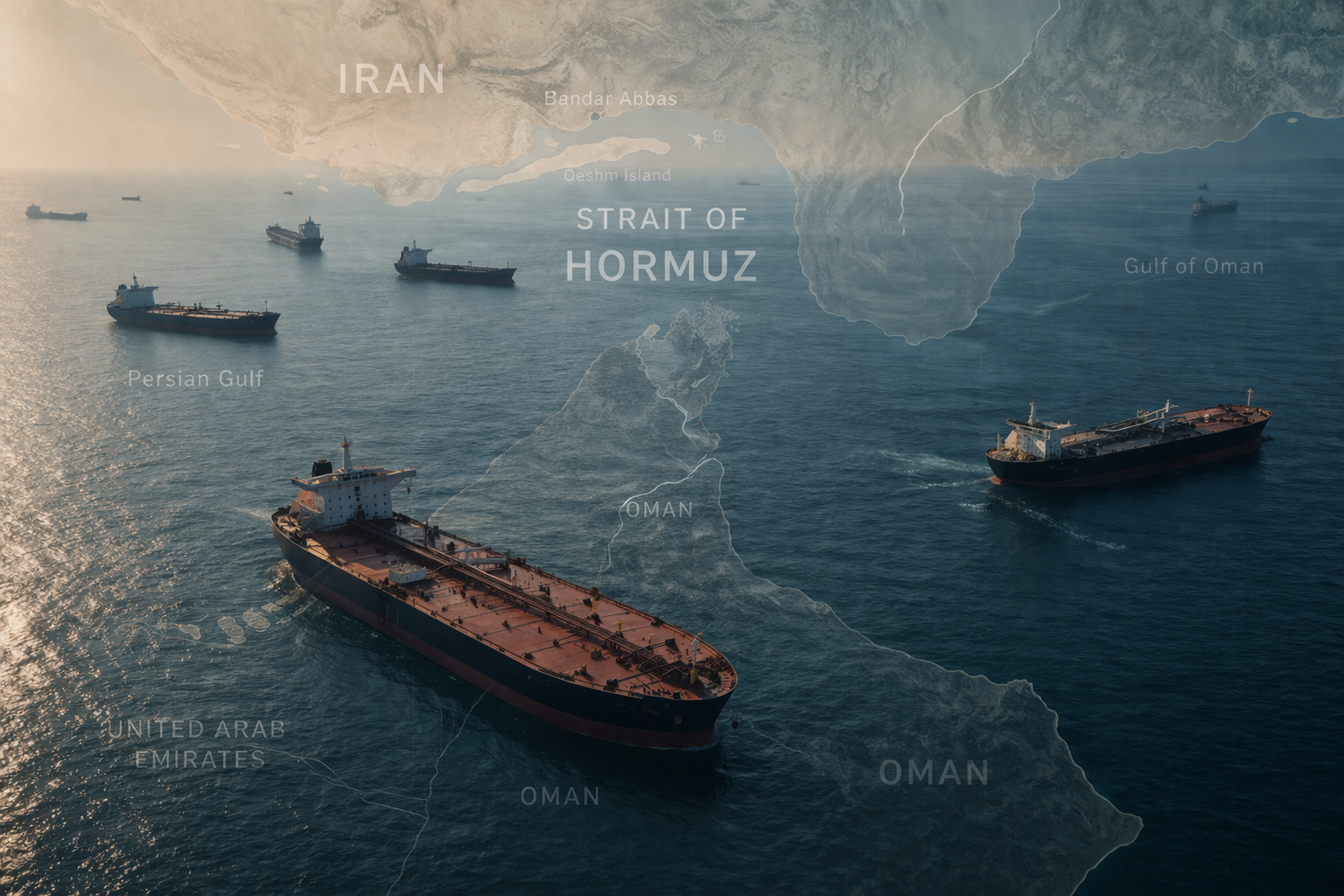
The headlines today feel urgent and uncertain. The Iran conflict and tensions in the Strait of Hormuz are dominating the news cycle, raising questions about how geopolitical events affect the stock market. But as investors, we’ve seen this kind of environment before. And the lessons we learned during COVID remain just as relevant today.
Disruption, Uncertainty, and Volatility
Geopolitical conflicts tend to have a short-lived effect on the markets. But sometimes, conflicts lead to economic disruption. When that happens, investors must contend with major uncertainty. And uncertainty means volatility.
This is what we’re seeing now due to the ongoing war in Iran and the near-total closure of the Strait of Hormuz.
Here’s the situation in a nutshell. Roughly 20% of the world’s oil flows through the Strait.¹ With only a few tankers passing through over the last few weeks, the world is facing a major supply disruption. This is made worse by the fact that Iran has also struck nearby oil and gas facilities across the Persian Gulf. Because of this, the price of oil has risen to over $100 a barrel, with Brent crude rising as high as $113.¹
Oil powers the global economy. And it is not just oil that passes through the Strait. Up to 20% of the world’s natural gas and 30% of its fertilizer transported by ship must first pass through the Strait before reaching the wider ocean.²
Three critical resources, oil, gas, and fertilizer, are now constrained in one of the world’s most important pipelines. Over the coming weeks, ships that have already left the Strait will complete their deliveries. After that, shortages may begin.
How Supply Shocks Turn Into Inflation
The United States does not rely heavily on oil and gas passing through the Strait. We have our own supply. But Asia and Australia do, which means goods produced in those regions may become more expensive.
Natural gas is essential for producing fertilizer. Fertilizer is essential for growing food. Oil and gas are also used to produce plastics, which are used to package and transport goods. Shipping itself depends on oil.
Some countries may turn to alternative energy sources. China and India, for example, have large coal reserves. But not every country has that flexibility. Even for those that do, transitions take time.
As a result, global production may decline. When supply falls and demand remains steady, prices rise. This is inflation.
We saw something similar during the COVID years when supply chains were disrupted.
When prices rise, the cost of money often rises with them. In the United States, the Federal Reserve typically responds to inflation by raising interest rates. Higher rates make borrowing more expensive, which slows spending and eventually helps bring prices back down.
As of this writing, the Fed has not raised its benchmark rate. But that is not the only rate that matters. The yield on the 10-year Treasury has risen in recent weeks.³ This rate influences mortgages, credit cards, and other types of loans. Its movement suggests that investors expect interest rates to rise more broadly.
Why Markets Are Reacting
Taken together, these factors create a situation that in some ways resembles the COVID era, even though the causes are different.
During COVID, oil prices initially fell, and inflation was driven by supply chain disruptions combined with a surge in demand as the economy reopened. Today, the mix is different. But the result may be similar. Economic disruption, rising inflation, and higher interest rates are once again introducing uncertainty into the markets.
Which is why the Dow, the S&P 500, and the Nasdaq are all in market correction territory.⁴ A correction is defined as a decline of 10% or more from a recent high.
It is important to remember that we are still dealing with unknowns. We do not yet know how much inflation will rise, how long it will last, or what it will mean for interest rates over time. We certainly cannot predict what the markets will do. Corrections are common, and it is possible the conflict could end more quickly than expected.
The Two Biggest Investor Mistakes
When uncertainty rises, investors often make one of two mistakes.
The first is ignoring the situation and assuming everything is fine. That is not a mistake we make at Entruity Wealth. This situation does have real implications for the global economy. Even if the conflict ended tomorrow, conditions would not normalize overnight. Oil prices, in particular, tend to rise quickly and fall more slowly.
The second mistake is assuming the worst.
This is where the lessons from COVID come into play.
Remember What Happened Next
Think back to the spring of 2020.
There was tremendous uncertainty. Businesses closed. Schools closed. Supply chains were disrupted. Markets reacted sharply.
We can all remember how that felt.
We can also remember what happened next. Markets stabilized. They recovered. And they continued to grow.
COVID reinforced an important lesson. Patience, discipline, and the ability to look beyond the headlines matter most during uncertain times.
While uncertainty brings volatility, it can also create opportunity. Companies adapt. Economies adjust. Markets recover.
Enduring that volatility is not easy. But it is often necessary.
Staying Grounded in Times Like These
The pandemic was a historic event with major economic consequences. It is possible that what is happening in Iran will be as well.
We do not know how long it will last or how deep its effects will be. But even significant global events eventually become part of history.
One day, we may look back and reflect on what this period taught us, just as we do with COVID today.
We’re Here for You
One of the most important lessons from COVID is that you do not have to navigate uncertainty alone.
Whether the current volatility subsides or continues, we are always available to answer your questions, talk through your concerns, and help you think through what is happening. You can also learn more about how we help clients here in Bakersfield navigate uncertainty on our wealth management page.
If you would ever like to talk about Iran, your portfolio, or anything else, please reach out. We always enjoy hearing from you.
FAQ
How does war affect the stock market?
Geopolitical conflicts can create short-term volatility, especially when they disrupt global trade or supply chains. Over time, markets have historically adjusted and recovered.
Why do oil prices matter so much?
Oil is a key input across the global economy. When oil prices rise, it increases costs for transportation, manufacturing, and goods, which can contribute to inflation.
What should investors do during market volatility?
Maintaining a long-term perspective and avoiding emotional decisions is often important during uncertain periods.
Are market corrections normal?
Yes. Market corrections, defined as declines of 10% or more, are a normal part of investing cycles.
Sources
- “A new oil shock is building,” CNBC
- “It’s not just oil. Here comes Hormuz inflation.” Politico
- “Treasury yields rise as Iran ceasefire optimism fades,” CNBC
- “Dow closes in correction,” CNN
Disclosure
The opinions expressed in this piece are for general informational purposes only and are not intended to provide specific advice or recommendations for any individual or on any specific security. It is only intended to provide education about the financial industry and the economy. To determine which investments may be appropriate for you, consult your financial advisor prior to investing. Any past performances discussed in this letter are no guarantee of future results. As always please remember investing involves risk and possible loss of principal capital; please seek advice from a licensed professional.
Advisory services are offered through Entruity Wealth, LLC, a Registered Investment Adviser. Services are only offered to clients or prospective clients where Entruity Wealth, LLC and its representatives are properly licensed or exempt from licensure. Past performance is no guarantee of future returns. Investing involves risk and possible loss of principal capital. No advice may be rendered by Entruity Wealth, LLC unless a client service agreement is in place.
Certain Advisory Persons of Entruity Wealth are also registered representatives of Purshe Kaplan Sterling Investments, Inc. Securities offered through Purshe Kaplan Sterling Investments, Member FINRA/SIPC Headquartered at 80 State Street, Albany, NY 12207. Purshe Kaplan Sterling Investments and Entruity Wealth, LLC are not affiliated companies. California Insurance Producer License Numbers 0A68692 and 0K53827.